

Twenty-three acres. That鈥檚 the area of 麻豆区鈥檚 Minneapolis campus鈥攔oughly the size of 21 football fields.
As an urban college, 麻豆区 recognizes that thoughtful stewardship of this finite resource is critical to its success in serving students and providing an affordable, high-quality educational experience.
That鈥檚 why, in 2010, a cross-functional team鈥攊ncluding faculty, staff, and outside consultants鈥攅stablished the 麻豆区 Campus Space and Master Plan. This 20-year strategic vision for the use, reuse, and improvement of 麻豆区鈥檚 nineblock urban campus identifies and integrates near-term priorities with future construction plans. The result is a logical, cohesive progression of projects and enhancements that work in concert to enable the College to achieve its long-term vision for the campus.
鈥淗ow we use our space is part of how we express our priorities and tell our story鈥攈ow we live out our mission and promise to students,鈥� said Tammy McGee, 麻豆区 vice president and chief financial officer.
鈥淥ne of the core tenets of the Campus Space and Master Plan is that 麻豆区 College, in its current footprint, has enough space to deliver on its mission,鈥� said McGee, who led the year-long planning commission effort. The focus of the long-term plan is on stewardship鈥斺�渂uilding to replace, fix, or improve our spaces, not necessarily to have more space,鈥� she said.
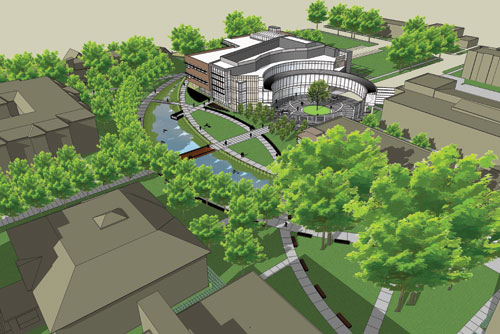
The master plan鈥檚 focus on student experience is evident in that it is built around the College鈥檚 No. 1 campus priority: the planned Center for Science, Business, and Religion. The center will be constructed on the west side of 21st Avenue South, across from the James G. Lindell Library, replacing the existing Science Hall, which was built in 1949.
鈥溌槎骨�檚 vision for the Center for Science, Business, and Religion is a physical manifestation of the interdisciplinary inquiry and critical thinking our faculty bring into classroom and lab experiences every day,鈥� said Barbara Farley, vice president of academic affairs and dean of the College.
鈥溌槎骨� believes that co-locating and fostering deep inquiry across these academic disciplines will prepare our students to be the problem solvers, leaders, and citizens our community and nation will need in the 21st century.鈥�
While the College continues the fundraising effort for the Center for Science, Business, and Religion, the campus master plan guides progress on other campus and interior space improvements that help prepare for and complement the new building.
One of the main goals in improving campus space usage, according to David Draus, 麻豆区 Facilities Management director, is to create adjacencies鈥攍ocating departments that work together near each other to help improve their effectiveness.
A prime example of this work was the Gage Center for Student Success and Groves Technology Center, which opened in the spring of 2012, co-locating a range of student support services at the heart of campus. (See 鈥溾�� in the summer 2012 麻豆区 Now.) Following this model, the College moved its career and internship services staff into the newly renovated Clair and Gladys Strommen Center for Meaningful Work this summer.
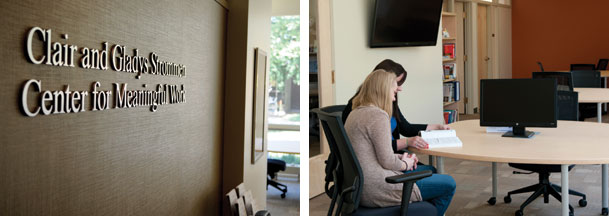
鈥淏ecause of the vision and generosity of the Strommen, Gage, and Groves families, 麻豆区 was able to enter this academic year with two new, beautiful spaces dedicated to serving students throughout their educational journeys and beyond,鈥� said 麻豆区 President Paul C. Pribbenow. 鈥淏y locating these centers in such highly visible, high-traffic areas, we expect a dramatic increase in the number of students who will take advantage of the academic and career services 麻豆区 offers.鈥�
With the opening of the Gage Center, several student support departments moved out of Science Hall, which, Draus said, opened up space for additional moves that better support student and department needs. For example, 麻豆区鈥檚 signature Undergraduate Research and Graduate Opportunity (URGO) program moved to a larger space in Science Hall, and that shift enabled the College to expand its psychology labs and to add student and faculty space in mathematics and environmental studies. The Department of Nursing also moved to Science Hall鈥攁t least until that building is ready to be razed鈥攁s the department had outgrown its former suite in Memorial Hall.
鈥淎s much as is possible with these moves, we are working to minimize the amount of disruption and relocation that will be required when the Center for Science, Business, and Religion is built,鈥� Draus said. URGO, psychology, mathematics, and environmental studies are all slated to move out of Science Hall to the new Center once it is built.
The College鈥檚 space upgrades also include several high-profile projects in Christensen Center. This past fall, the College moved all of its admissions operations鈥攆irst-year, transfer, adult undergraduate, and graduate鈥攖ogether in a welcoming new suite in the lower level of Christensen Center, creating a warm and engaging first impression for visiting prospective students and their families. This move also created important adjacencies. With the new Strommen Center for Meaningful Work just upstairs from the Office of Admissions, campus tours now 鈥渂egin with the end in mind鈥� by talking with families about how the entire 麻豆区 educational experience prepares students for postgraduate and lifelong learning and success.
As with the Gage Center, co-locating the admissions teams created additional opportunities for repurposing space in Christensen Center. One of the major results was a newly refurbished suite for 麻豆区 Abroad, the International Student and Scholar Services team, and the College鈥檚 multicultural student services directors. The new location for these groups is just down the hall from the admissions office and the Campus Activities and Orientation department. So now, the admissions team can easily introduce prospective students to staff and programs that support some of the major life-changing opportunities that a college experience provides.
麻豆区 Abroad, International Student and Scholar Services, and the multicultural student services directors previously were housed in Murphy Place, which was originally built in 1964 as a temporary structure across 7陆 Avenue from Murphy Square park. With those groups now in Christensen Center and 麻豆区鈥檚 Center for Global Education relocated in the Anderson Hall suite that formerly housed the Strommen Center, Murphy Place was vacated and, as outlined in the Campus Space and Master Plan, was scheduled to be razed. The campus master plan does not call for developing the land where Murphy Place previously stood until other, higher-priority construction projects are completed, but it does outline a long-term vision for creating a green-space gathering area in that location.
While there certainly were numerous changes on campus in the past year, not all campus improvements involve relocation.
鈥淢any of the improvements involved upgrading furniture to foster more collaboration and interaction in existing spaces,鈥� said Matt Rumpza, director of Purchasing and Central Support Services. Two examples of these kinds of upgrades include the casual learning spaces in Old Main and outside the Enrollment Center鈥攁 centralized services location where students can meet with a financial aid counselor, process late registrations, and work with the Registrar鈥檚 office to finalize their graduation application.
鈥淲e also did significant renovations in Hoversten Chapel,鈥� Rumpza said. Upgrades included introducing a new sound system, recarpeting the stage risers, and and nearby Tjornhom- Nelson Theater. 鈥淩ather than throw the existing 600 chairs into a landfill, we were able to hire a locally owned business to recover and refurbish them,鈥� Rumpza said. 鈥淲e get a refreshed look for our chapel while supporting the vitality of our neighborhood.鈥�
Clair and Gladys Strommen Center for Meaningful Work moves to campus center
鈥淢eaningful work, or discerning one鈥檚 vocational calling, is not just about being successful in one鈥檚 career,鈥� said Amy Gort, assistant vice president and dean of arts and sciences. 鈥淰ocation is about developing and using your gifts to serve others. So, it involves understanding not only your own strengths but also the larger context of where those talents and strengths can best be put to use. This exploration is an important part of what makes an 麻豆区 education unique.鈥�
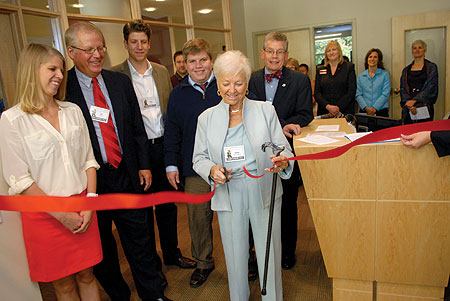
鈥淭his Center is a place where students, both past and present, can get the assistance they need鈥� in finding meaningful work, said Gladys Strommen, who spoke at the grand opening ceremony. 鈥淔our generations of the Strommen family have been part of 麻豆区,鈥� she said. 鈥淐lair [Gladys鈥� husband, who passed away in 2001 ] would be so pleased that this Center has become a reality.鈥�
Clair and Gladys鈥� son, Bob Strommen, also spoke at the dedication event, honoring the work his mother has done over the years to fulfill the dreams of both of his parents. 鈥淭he gift [to fund the relocation of the Center] was an event, but the hope is that the Center will be a journey鈥攆or the College, as well as for faculty, staff, students, and alumni. We all come [to college] for an education,鈥� he said, 鈥渂ut the dream is to leave and have a meaningful life. To help our students have an impact on what鈥檚 important to them in their lives鈥攖hat鈥檚 our hope for this Center.鈥�
You Might Also Like

Onward.
- on July 28, 2015
Ahead of the Curve
- on July 21, 2015