There are only 8 spots still available for this 11-day trip! Please contact Katie Code (codek@augsburg.edu) if you’re interested in learning more.
The alps above Berchtesgaden
Bavaria is known for many things, including soaring peaks, very large mugs of beer, and 鈥湷野济� Gott!鈥� Mountains and beer you can get in many other destinations, but 鈥湷野济� Gott鈥� you鈥檒l only get in the German-speaking regions that surround the Bavarian Alps. (The odd-looking 鈥溍熲�� is actually a double-鈥渟鈥�.) If you want to try greeting someone with 骋谤眉脽 Gott you鈥檒l want to say it like this: GrooS GoT鈥攍anding hard on both the 鈥淪鈥� and the 鈥淭鈥�.
骋谤眉脽 Gott is shortened from 鈥�骋谤眉脽 dich Gott,鈥� an old way of saying 鈥淕od bless you鈥� in German. The phrase is more religious than 鈥淕uten Tag鈥� so it鈥檚 a phrase befitting Germany鈥檚 most religious and most Roman Catholic region. The closer you get to Bavaria鈥檚 majestic mountains, the more you鈥檒l be greeted with 骋谤眉脽 Gott instead of Guten Tag. It鈥檚 as if those dramatic elevations naturally give rise to spiritual yearnings.
Bavaria is Germany鈥檚 largest state, covering one-fifth of the country. It may not be obvious from looking at a map, but our tour鈥檚 wide-ranging itinerary falls entirely within Bavaria (not including our dip into Salzburg, Austria). From the Castle Coburg (where Martin Luther resided during the time of the 鈥溌槎骨� Confession鈥�) to Berchtesgaden/Obersalzburg (where the Third Reich constructed its infamous mountain fortress), we鈥檒l span a land filled with great natural beauty and complicated human history.
Still, you may wonder: What does 麻豆区鈥攁 school with deep roots in the heritage of Norwegian Lutheran immigrants鈥攈ave to do with the most Roman Catholic region of Germany? Only a lot!
Consider first our name, 麻豆区. We are called 麻豆区 because of a specific historical development that took place in 麻豆区鈥攖oday Bavaria鈥檚 third most populous city. (Our tour ends in 麻豆区!)
Second, Bavaria has many cities and sites that are important to the ongoing Reformation of the Church, including Nuremberg (the largest 鈥減rinting center鈥� of the Reformation), Flossenb眉rg (where the great 20th century theologian, Dietrich Bonhoeffer, was martyred), and Salzburg (yes, the 鈥淐ity of Mozart鈥� but also the city that once expelled its entire Lutheran population).
Third, Oberammergau鈥檚 Passion Play dramatizes the very events that unite all Christians, Catholic, and Protestant: the last week of the life of Jesus of Nazareth.
Fourth, Bavaria鈥檚 topography鈥攔anging from rolling hills to high mountains鈥攊s reminiscent of the topography those Norwegian Lutheran immigrants longed for as they settled the flat spaces of the Upper Midwest. (Okay, I know this last one is a stretch.)
I鈥檝e been fortunate to travel in Bavaria many times over the years. I鈥檝e exchanged 骋谤眉脽 Gott! with Bavaria鈥檚 眉ber-friendly people many, many times. So I鈥檓 excited to ! Interested in learning more about this one-of-a-kind travel and learning opportunity? Don鈥檛 hesitate to send me an email at wiersma@augsburg.edu.
–听贬补苍蝉听奥颈别谤蝉尘补, associate professor of religion at 麻豆区
The full and melodic harmony reminiscent of male quartets that represented many Lutheran colleges in the first half of the 20th century will be on full display at the Silver Auggies lunch on Saturday, September 28, when the 麻豆区 Male Quartet from 1959 provides special music.
The luncheon music will feature Rennard Svanoe 鈥�59, MDiv 鈥�62; Victor Svanoe 鈥�62; Jim Svanoe; and Donald Gilberg 鈥�60. Intended for 麻豆区 graduates from 1968 and earlier, the luncheon is one of and Reunion Week, Sept. 24-28.
In the late 1800s, 麻豆区 was among the first Lutheran colleges to discover the value of these 鈥渟inging ambassadors,鈥� whose four-part a cappella harmony and spiritual messages inspired many in congregations, youth conventions, and a variety of other venues. 麻豆区鈥檚 history of male quartets (1885-1961) has been documented in the 2004 book, The 麻豆区 Quartets: A Mission-Driven Tradition, written by David M. Larson and Merton Strommen 鈥�42. The book includes pictures of most of the 麻豆区 quartets, whose early participants included F. Melius Christiansen, whose distinctive mark on Lutheran a cappella choir music is indelible.
Of the three Svanoe brothers who sang with Gilberg in the 1958 quartet鈥擜lfred, Rennard, and Victor, two will sing at the luncheon. Alfred has passed away, and his cousin, Jim Svanoe, a Luther College graduate, will fill his role on Sept. 28. Joe Nystuen MDiv 鈥�62, who sang with the 1959 (touring) quartet, is living with one lung, and so Gilberg will take his part.
Starting Early
Growing up in a 鈥渟inging family,鈥� the three Svanoe brothers got a good head start in the art of harmonizing by performing at family gatherings, where they would sing three-part treble harmony鈥攂efore their voices changed. In their high school years, their uncle Dick Svanoe sat at the piano and added his barbershop-trained voice, thus providing the fourth part.
At college, singing in the 麻豆区 Choir put the Svanoe brothers in touch with Don Gilberg (from Carpio, North Dakota)鈥攁 connection that led to formation of the quartet, and eventually to an audition with 麻豆区鈥檚 Leland B. Sateren in order to enable them to officially represent the College as the 麻豆区 Male Quartet.
Often, the quartet sang at the Svanoes鈥� home church, Oak Grove Lutheran in nearby Richfield, Minnesota, where Merton Strommen (a member of an earlier 麻豆区 quartet) had served as the brothers鈥� high school Sunday School teacher, and as youth choir director. The relationship with Strommen led to the quartet鈥檚 opportunity in summer 1958 to sing in Green Lake, Wisc., at the convention of the Luther League Federation, for which Strommen served as director.
A year later, after worship one Sunday, the quartet gathered in the sanctuary where another Oak Grove member, Norman Kaupang, set up his equipment to record the quartet鈥檚 songs for a 33-RPM record, which was later remastered for the CD that now appears if you Google 鈥溌槎骨� Male Quartet.鈥� By then, Joe Nystuen had replaced Gilberg in the group, adding an inspirational verbal component between musical sets at each concert.
Touring
Of his experience touring with the quartet, Rennard Svanoe says his Midwestern horizons were 鈥渃onsiderably broadened.鈥� Their travels allowed the quartet to meet nearly all the pastors of the Lutheran Free Church (a predecessor body of the ELCA), and to explore a variety of really interesting places鈥攖he Rocky Mountains, Puget Sound, the Columbia River, Norwegian fjords, and the English Channel. Their experiences even included a visit to Svanoe Island, the brothers鈥� ancestral home on the west coast of Norway.
The quartet appeared at homecoming events at 麻豆区 (even after graduating), and at various congregations in the Twin Cities area. At one concert, traveling Lutheran evangelist Oscar Hanson heard the quartet sing and was so impressed that he offered to arrange for a tour of Norway in 1961. Hanson (late father of ELCA Presiding Bishop Emeritus Mark Hanson) had served as pastor of a church in Oslo, Norway, and had enough connections to set up a tour that included 55 appearances in the U.S., followed by 25 appearances in Norway.
Most of the group鈥檚 concerts in Norway were held in state Lutheran churches, and three in cathedrals. They found their largest crowd in a hall in Bergen, where they filled the facility. That concert holds a special memory for Rennard Svanoe as he recalls one young man climbing onto an open window sill seeking a better view of the quartet, only to land on the ground outside鈥攗nharmed, thankfully.
In the Long Term
One notable offshoot of the quartets鈥� success over the years has been the coming together, since 1993, of numerous former quartet members, to unite in song by participating in the 麻豆区 Centennial Singers, an all-male choir organized by Strommen, and for some years, directed by him. The group of about 50 continues to perform, and membership has been expanded beyond the former quartets.
Such opportunities can build memories for a lifetime鈥攏ot to mention long-term friendships. Musical groups tend to have powerful potential to do so. Rennard Svanoe says that singing in the quartet with brothers and a best friend 鈥渂uilt in a long-term effect, as we often referred to our experiences over the years.鈥�
When asked if any particular quartet experience stands out as something to truly relish, Rennard Svanoe described a Sunday afternoon concert in Abercrombie, North Dakota, in 1959. As an electrical storm brewed during the first set, the quartet was singing the classical number, 鈥淐reation.鈥� As they sang about darkness covering the face of the deep, the lights in the sanctuary went out. Nonetheless, they continued singing鈥攎emorization does pay off! The piece continued with words about the Spirit moving over the face of the waters in a prolonged passage that ended with the quartet singing in unison, 鈥淎nd God said, 鈥楲et there be light,鈥� and there was light, light, and there was LIGHT.鈥� At that moment the lights came back on in perfect timing with the song.
As the saying goes, God has a sense of humor鈥攁nd certainly delights in music. The sense of timing on that blessing was absolutely perfect to the Quartet.
The 麻豆区 Podcast features voices of 麻豆区 faculty and staff. We hope this is one way you can get to know the people who educate our students to be informed citizens, thoughtful stewards, critical thinkers, and responsible leaders.听
Language is so much more than vocabulary and grammar. For Sarah Degner Riveros, Lecturer in Spanish, languages are inseparable from their history, community, and culture. In this discussion, we explore many ways the teaching and learning of Spanish opens doorways to a wider world and into the deeper self.
Tyler Heaps at training in the UK prior to the opening of the World Cup competition in France.
Tyler Heaps 鈥�13 has loved soccer since he was a boy, kicking a ball around the back yard with his older brother and three sisters. The memories don鈥檛 get much better, however, than those made this summer, when his professional work in data analysis allowed him to be embedded with the U.S. Women鈥檚 National Soccer Team as it competed for the World Cup in Lyon, France.
On July 7, all the hard work paid off when the U.S. team triumphed over the Netherlands, 2-0, winning its second consecutive World Cup championship. Heaps says playing a tiny part in helping the U.S. win the seven-game series鈥攁nd the World Cup鈥攚as 鈥渙ne of the most challenging and rewarding experiences鈥� of his life鈥攁nd something he will never forget.
Not unlike football and baseball teams鈥� use of video coverage and data analysis to enhance skills on the field, coaches and staff at U.S. Soccer are discovering the value of reviewing their own team鈥檚 playing habits, as well as those of their opponents, through data collection, video, and studying trend lines. As Heaps says, 鈥淣o one can recall every action that happened during a game (and especially not 10-15 games), so being able to apply objective data to identify key areas can help in preparation.鈥�
Heaps, who played soccer as an 麻豆区 student, is now manager of analytics and research for U.S. Soccer, where he oversees the initiatives of the organization to both analyze sports data and help staff scout potential talent. While he loves the excitement of the uncertainty, flow, and freedom of soccer, Heaps feels that the development of new technology鈥攊Pads on the bench, data availability, VAR (video assistant referee), etc.鈥攎akes for greater precision, helps referees make the correct decisions, and ultimately improves the game.
Heaps with Coach Jill Ellis and the World Cup trophy.
Jill Ellis, head coach of the U.S. Women鈥檚 National Team, is one of the soccer coaches who has developed an appetite for this information and has worked to apply it and learn more from it. Ellis, who just announced her retirement from U.S. Soccer on July 30, is only the second coach (first female) to have led a soccer team to two consecutive World Cup championships (Pozzo鈥擨taly, 1934, 1938).
Heaps feels very fortunate to have this opportunity to explore the sports analytics world, especially after having spent most of his time at 麻豆区 either on the soccer field or behind a computer or math book.
Prior to taking on his responsibilities with U.S. Soccer in 2016, Heaps worked in the human resources firm, Ceridian, where he fine-tuned his skills in programming and data management. During his off-hours, he coached soccer teams鈥攁n experience that he finds very helpful in creating relationships with the technical staffs at U.S. Soccer.
As with many college athletes, he continues to enjoy friendships forged on the Auggie soccer field鈥攁 great benefit that he credits to the leadership of head coach Greg Holker and his staff. He takes particular satisfaction in seeing the game continue to grow here in the U.S. What better way to see it generate excitement in the U.S. than a huge win in France?
The 麻豆区 Podcast features voices of 麻豆区 faculty and staff. We hope this is one way you can get to know the people who educate our students to be informed citizens, thoughtful stewards, critical thinkers, and responsible leaders.听
Associate Professor of Social Work Ankita Deka guides her students to new insights about society, privilege, and the unique position of social workers to be agents of positive change in their communities.
The 麻豆区 Podcast features voices of 麻豆区 faculty and staff. We hope this is one way you can get to know the people who educate our students to be informed citizens, thoughtful stewards, critical thinkers, and responsible leaders.听
Lori Brandt Hale, Associate Professor of Religion, believes all questions have answers: that curiosity and inquiry across traditions can bring about insight that informs, inspires, and activates.
I am from Norway. I grew up there and spent my first 20 years of life in a country that many consider being the perfect place to live. Norway ranks the lists of countries that inhabit the happiest people. We are known for a wonderful supportive healthcare system, long and paid maternity/paternity leave, free dental care (first 18 years), sick leave and good pensions as well as at least 6 weeks of vacation each year.听
Not only is Norway good on the homefront, on the international stage, Norway has become increasingly known for its global peace efforts: both through the prestigious but also through peace processes outside and inside of its borders. Since 1993 Norway has made an active contribution to in Afghanistan, Colombia, Myanmar, Nepal, Israel/Palestine, The Philippines, Somalia, and Sri Lanka to name a few.听
Not easy to top, right?
As a native Norwegian, it鈥檚 hard to put into words how proud I am of these facts. And as an employee of 麻豆区, it adds another dimension to my pride that I am so fortunate to work for a Norwegian founded institution that鈥攐n an ongoing basis鈥攈ighlights and celebrates Norway鈥檚 accomplishments through our 30-year history hosting the Nobel Peace Prize Forum; our long history of teaching the language and culture; hosting students from Norway; our new partnership development with the ; and through our collaboration with local and national Norwegian initiatives and programming through our very own Norway Hub.听
For most of you, the information above is common knowledge. You have lived and breathed the 麻豆区 air and you are an Auggie after all, right? But wouldn鈥檛 you want to experience this first hand? Like go to Norway and participated in a uniquely planned itinerary that will take you to places you normally wouldn鈥檛 go? I would.听
The May 2020 trip鈥擭orway Now鈥攑rovides amazing opportunities to experience our deeply rooted ties, history and contemporary connections with this unique country. You will indeed visit and experience where and how some of these peace efforts take place and see how deeply 麻豆区 has been engaged and still is.听
In Oslo, you will have a chance to visit the 飞丑别谤别听
the Nobel Peace Prize Award Ceremony takes place each year and where the walls are covered (literally) in Edvard Munch鈥檚 murals. You will also have a chance to tour the where the each year picks a winner to receive one of the most prestigious prizes: the Nobel Peace Prize. The, down by the gorgeous Aker Brygge (harbor), will share with you several interesting exhibits including past Nobel Peace Prize winners, and the most current laureate (announced in October 2019) will be on display!
In Lillehammer, we will visit and experience the work of the Nansen Center for Peace and Dialogue a center that 鈥渉as become an international hub for dialogue work focused on interethnic dialogue, conflict transformation, reconciliation, inclusive communities, and democracy.鈥� Steinar Bryn, a longtime friend and supporter of 麻豆区 and a mentor to our will lead the way and provide us with a lecture about current work, pedagogy, and programs. Heck, we may even engage in a dialogue as we hike down the Olympic Ski Jump鈥檚 936 steps together (hint: one of Steinar鈥檚 tools)?聽
And wouldn鈥檛 you want to be able to answer the following questions upon your return?
Are Norwegians indeed happier than others?聽
Why is the Nobel Peace Prize given out in Norway?
Who is Bertha Von Suttner?
Why is Fritfjof Nansen considered a peacemaker?
What are some of the peace processes Norway uses?聽
Can you tell how excited I am to bring you to Norway to discover, discuss and see the actual sites where this important work takes place? I am.听
Join me in Oslo on May 10, 2020. I have ordered blue skies and about 20 degrees celsius.听
About five years ago, I fell in love (again) with Henrik Ibsen. As an 麻豆区 graduate, theater artist and Professor, I鈥檝e been reading his plays for over 30 years, but after re-reading An Enemy of the People, my passion for Ibsen鈥檚 plays gave me a big mid-life boost.听
It happened shortly after hearing about the Flint Michigan鈥檚 water cover-up. My husband, Luverne Seifert who is also an Auggie and a professional actor in the Twin Cities said: 鈥渄o you remember that play about contaminated water that Ibsen wrote鈥�? Sure enough, after reading our little weathered paperback version, we were forever changed. Turned out that Ibsen鈥檚 An Enemy of the People had an uncanny similarity to the contaminated water problem that occurred in Flint Michigan.听
For those of you who need a little reminder, Ibsen鈥檚An Enemy of the People examines how a community responds when a local doctor threatens to expose that the water it relies upon for tourism is being poisoned. The play questions how far a community will go to protect their town鈥檚 secret in order to avoid financial ruin.听
The re-read inspired us so much that we created our own adaptation and produced it. Supported by the MN聽
State Arts Board, our Sod House Theater Company (Luverne and my theater company we formed in 2011) has performed our unique bluegrass music-infused adaptation to over 15 communities in greater MN.听
Our renewed love of Ibsen also spurred our interest in traveling to Norway in order to experience not just Ibsen鈥檚 artistry but all the arts that Norway has to offer! 聽We are so delighted to be asked to lead the 150 Sesquicentennial Norway Arts & Culture trip in May 2020! Both Luverne and I, as 麻豆区 Theater graduates (鈥�85 and 88鈥�), find it so meaningful to have the chance to explore our institution’s origins. Both Luverne and I had life-changing experiences at 麻豆区鈥攚e, like you, had professors that significantly influenced who we are today.听 We鈥檙e humbled to be leading this trip, for 麻豆区, together. Full circle.听
We鈥檇 love for you to join us in experiencing all of the amazing activities we have planned in Norway! We鈥檒l visit The National Theater, the Ibsen museum, the incredible Opera House that seems to emerge from the ocean, The Viking Ship Museum, a Stave Church and celebrate Syttende Mai Festival! Come join us in the land the inspired one of the greatest playwrights of all time.听聽
The 麻豆区 Podcast features voices of 麻豆区 faculty and staff. We hope this is one way you can get to know the people who educate our students to be informed citizens, thoughtful stewards, critical thinkers, and responsible leaders.听
Jill Dawe, Associate Professor of Music, shares her fascination with the connective power of music: its capacity to share, express, and bring together communities across cultures and centuries.
Careful travelers search the internet for maps, cruise over to AAA for their fancy brochures with highlighted directions, giving details on gas stations, food, rating campgrounds, and hotels. If you鈥檙e a careful traveler, you probably clean out your refrigerator, dump the garbage, pay your bills, upload all travel apps鈥攁nd complete this in good time before you depart.
And then there are the spontaneous types鈥攖he adventurous ones who prefer to hop in the car and take off out of town, buying licorice and chips and string cheese on the way, making no arrangements about where to lodge– and forgetting toothpaste.
We are pilgrims, those who will hike with me on the 2020 Norway Pilgrimage. Daniel Taylor writes, 鈥淲hat does it mean to say one is always on a pilgrimage? It means, among many things, that one must always be alert. The pilgrim is on the lookout for significance, for signs and rumors of transcendence . . . It means I must look for the holy within the mundane,鈥� (In Search of Sacred Places).
Join me and other pilgrims in this rare opportunity to hike with companions in some of the most gorgeous landscape in the world; we will traverse rivers, be awed by mountain ranges and woodsy paths, and finally set foot in Nidaros, the northernmost cathedral in Europe and our destination in Trondheim, Norway. Our route is the Gudbransdalen Path, which during the Middle Ages was the main road from Oslo to Nidaros (Trondheim).
No matter what kind of traveler you are, you will become a 鈥減ilgrim鈥� and experience the holy ground of this route.听 Your footsteps, at times challenging, will have the grounding of our travel company who provides expert planning and support, the friendship of other Auggie pilgrims, and the hospitality of our Norwegian hosts throughout the trip.
The Pilgrims Path. Photo: Mattian Jansson / trondelag.com
Two years ago, I led this pilgrimage and here is one participant鈥檚 reflection:
Today鈥檚 hike was absolutely breath-taking. No pun intended鈥� And the beauty was objective. It was the type of beauty everyone can agree on, not to be portrayed by words or even pictures. I found myself wishing that my mom, dad or close friends could鈥檝e been there too. How am I supposed to have this magic all to myself? When I return home (yuck), I鈥檒l try to share my experience in words, but again, it won鈥檛 bring this experience justice 鈥� not even close.
We started the hike from Skaun Commune. This space has been popular among fellow hikers, or 鈥減ilgrims,鈥� that travel along Pilgrimslea. We followed the blue, 鈥淧ilgrimslea鈥� sign up a large, paved road visible from the commune. Slowly, we made our way into the mountains. The trail started off as a leisure walk. The ground was solid and we were able to observe our surroundings as we moved along. This was easy! 鈥淔ollow the orange, wooden stake, follow the orange, wooden stake.鈥� (That was my attempt at mimicking the 鈥測ellow brick road鈥� bit from The Wizard of Oz, however, my version feels much more forced.)
The wooden stakes were marked with red-orange tips and a small marking we called a 鈥渟quiggle.鈥� Yes, we鈥檙e intellects. One of these sat on the outskirts of a heavily wooded area, and we had no choice but to accept it鈥檚 invitation.
We made our way down the mountain, each turn instilling us with hope that our destination was near. Well, the trees were probably laughing at us. Towering above, they could see we wouldn鈥檛 reach our bed and breakfast for another several hours. And to the trees, we said, 鈥渨ho鈥檚 laughing now!鈥� The group was relieved to find our new friend, John. For his presence signified the end of our 10-mile hike. John was the husband of Karen. John and Karen owned a bed and breakfast across the river from where we stood, and it looked promising. We followed John down to the river where we expected to board a ferry. But alas, the ferry we chalked up to be large and Victorian was a small, wooden, five-person boat just wider than a canoe. But at this point, our bodies were sore, knees weak and feet swollen to the point where chuckling was a natural reaction. All aboard!
Across the river, we entered our farmhouse sleeping quarters. Karen opened the green and white striped barn door. Inside, was a room constructed entirely of wooden beams. The dining room was extravagant, with chandeliers hanging about and candles lit up and down the tables. The building was taller than it was wide and with each set of stairs leading to a new level of charm. Trinkets played on every surface, and memories of the past draped the walls. If hobbits were to occupy this town, this would be the hobbit Castle. I don鈥檛 think I鈥檝e ever slept in a place so perfect.
Right now, I feel so lucky. I鈥檓 in Norway, which is across the world. The bed I鈥檓 laying in has been appreciated by so many before me, all with their own reason for sleeping here. That realization alone could set my mind wandering for hours! Each with their own interpretation of the pilgrimage and this gorgeous space that welcomed our desperate bodies. Although, I bet we could all agree on one thing. Today was beautiful.
Contact Katie (Koch) Code 鈥�01, Director of Alumni and Constituent Relations, at codek@augsburg.edu or 612-330-1178 if you are interested in learning more about 麻豆区鈥檚 travel opportunities or to be placed on a list to receive the most up to date information about the trips.


 I鈥檝e been fortunate to travel in Bavaria many times over the years. I鈥檝e exchanged 骋谤眉脽 Gott! with Bavaria鈥檚 眉ber-friendly people many, many times. So I鈥檓 excited to ! Interested in learning more about this one-of-a-kind travel and learning opportunity? Don鈥檛 hesitate to send me an email at wiersma@augsburg.edu.

 At college, singing in the 麻豆区 Choir put the Svanoe brothers in touch with Don Gilberg (from Carpio, North Dakota)鈥攁 connection that led to formation of the quartet, and eventually to an audition with 麻豆区鈥檚 Leland B. Sateren in order to enable them to officially represent the College as the 麻豆区 Male Quartet.
 I am from Norway. I grew up there and spent my first 20 years of life in a country that many consider being the perfect place to live. Norway ranks the lists of countries that inhabit the happiest people. We are known for a wonderful supportive healthcare system, long and paid maternity/paternity leave, free dental care (first 18 years), sick leave and good pensions as well as at least 6 weeks of vacation each year.听


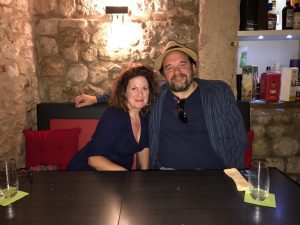

 origins. Both Luverne and I had life-changing experiences at 麻豆区鈥攚e, like you, had professors that significantly influenced who we are today.听 We鈥檙e humbled to be leading this trip, for 麻豆区, together. Full circle.听